
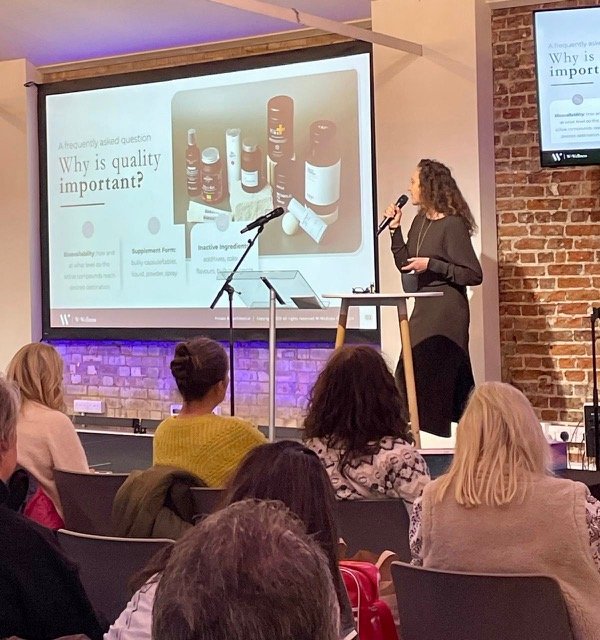
Last weekend I had the pleasure of speaking at a practitioner event in London on the topic of Balancing Female Hormones. One area I focused on was something that is gaining increasing attention in research: the interaction between environmental exposures, cellular stress and long-term women’s health.
Women today are exposed to a surprisingly large number of synthetic chemicals through daily life. Estimates suggest the average woman may encounter around 140 different chemicals each day, largely through personal care products, cosmetics, plastics, UV filters and household products.

At the same time, women account for around 65% of Alzheimer’s diagnoses worldwide.
Of course, this statistic cannot be explained by chemical exposure alone. However, researchers are increasingly exploring how environmental factors may interact with hormonal changes, ageing biology and cellular stress pathways.
Phthalates: A Common Everyday Exposure
One group of chemicals receiving significant attention are phthalates, which are widely used as plasticisers and fragrance stabilisers. They are commonly found in:
Personal care products
Eyelash and nail glue
Fragranced cosmetics
Plastic packaging
Household cleaning items
Phthalates are known to interact with hormone signalling pathways and have been linked in research to alterations in oestrogen and progesterone activity, changes in menstrual cycle characteristics and increased oxidative stress.
The cumulative effect over decades is now an important consideration when thinking about hormone health and cellular resilience.

What Can We Do?
The goal is not to spread fear. Environmental exposures are a reality of modern life. By understanding them, there are practical steps we can take to reduce exposure and support the body’s natural defence systems.
Ways to reduce exposure
Choose fragrance-free personal care products
Reduce use of plastic food containers, particularly when heating food
Store food in glass or stainless steel
Choose phthalate-free cosmetics and toiletries
Ventilate living spaces and avoid heavy synthetic fragrances
Filter drinking water where possible
Limit ultra-processed foods and packaged foods
Wash new clothing before wearing
Consider whether fake nails and eyelashes are worth the risk
Choose mineral or non-chemical sunscreen where appropriate
Small changes across multiple areas can significantly reduce overall chemical exposure.

Supporting the Body’s Natural Defence Systems
Alongside reducing exposure, nutrition can play an important role in supporting detoxification pathways, antioxidant systems and cellular resilience.
Some key nutrients and compounds include:
Glutathione
Often referred to as the body’s master antioxidant, glutathione helps neutralise reactive oxygen species and supports Phase II detoxification pathways in the liver. It also plays an important role in protecting mitochondria and cellular DNA from oxidative damage.
Alpha Lipoic Acid (ALA)
ALA is a powerful mitochondrial cofactor that helps support energy production while also recycling other antioxidants such as vitamin C, vitamin E and glutathione. It is particularly valuable in conditions associated with oxidative stress and mitochondrial decline.
Sulphur Amino Acids
Amino acids such as methionine, cysteine and taurine provide the sulphur groups needed for key detoxification processes including sulphation and glutathione synthesis. These pathways are essential for metabolising both hormones and environmental chemicals.
Phosphatidylcholine (Liposomal PC)
Phosphatidylcholine is a key component of cell membranes and plays an important role in cellular integrity, liver function and brain health. Liposomal forms can help support membrane repair and provide choline for acetylcholine production, which is important for cognitive function.

These are the types of supplements I discuss when working with clients who have high toxic exposure – do get in touch if this is an area you’d like to discuss.
A Resilience-Based Approach
While we cannot eliminate all environmental exposures, we can support the systems that help the body manage them.
By combining exposure awareness, supportive nutrition and targeted supplementation, it is possible to strengthen the body’s natural detoxification and antioxidant pathways and support long-term health.
Supporting the Body Naturally
Alongside reducing exposure, there are also simple lifestyle and dietary habits that can help support the body’s natural detoxification and antioxidant systems.
Some practical strategies include:
Stay well hydrated
Adequate water intake supports kidney function and helps the body eliminate water-soluble metabolites produced during detoxification.Eat cruciferous vegetables regularly
Vegetables such as broccoli, Brussels sprouts, kale and cauliflower contain compounds that support detoxification pathways and activate protective cellular mechanisms.Prioritise fibre intake
Fibre supports healthy digestion and helps facilitate the elimination of metabolised hormones and toxins through the gut.Support gut health
A healthy microbiome plays a role in hormone metabolism and detoxification processes.Ensure adequate protein intake
Protein provides the amino acids required for detoxification pathways and antioxidant systems such as glutathione.Prioritise sleep
Many repair and detoxification processes occur during sleep, including important brain clearance mechanisms.Move regularly
Physical activity supports circulation, lymphatic flow and metabolic health, all of which contribute to efficient detoxification.
Once these foundations are in place, targeted nutrients and supplements may further support the body’s natural defence and detoxification systems.

Understanding these connections is becoming an increasingly important part of modern women’s health and longevity medicine.
I can support with bespoke nutrition programmes which assist with managing health in the face of high toxic exposure. Email me at bellenutrition@gmail.com if you’d like to discuss.